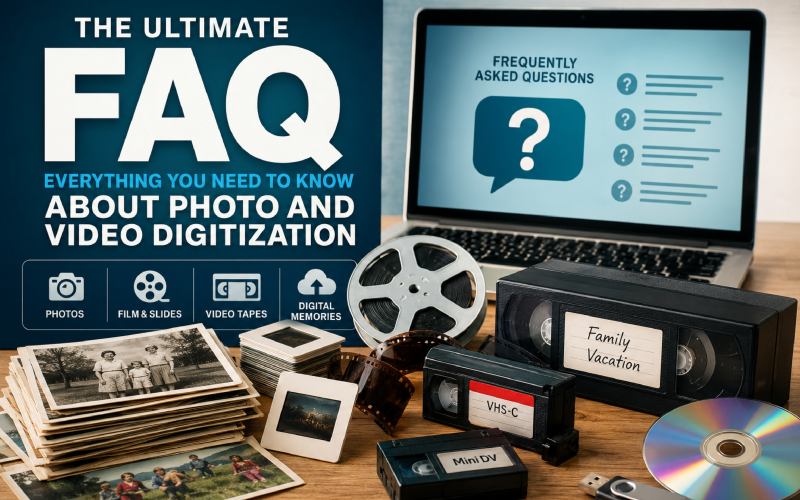
Old photos and home videos do not last forever. Prints fade, VHS tapes lose quality, and film reels become fragile over time. The good news is that digitization helps protect those memories before they disappear.
This detailed photo digitization FAQ list answers the most common questions families ask before starting a preservation project. Whether you are organizing old albums, converting VHS tapes, or looking through old negatives, this guide will help you understand the process in simple terms.
Many families also search for a trusted photo and video digitization service FAQ to understand how professional preservation works before sending valuable memories for scanning or transfer.
What Is Photo and Video Digitization?
Photo and video digitization is the process of converting physical media into digital files that can be stored on modern devices. This can include:
- Printed photographs
- Slides
- Negatives
- VHS tapes
- VHS-C tapes
- MiniDV tapes
- Film reels
- DVDs
- Audio recordings
Once digitized, files can be viewed on computers, phones, tablets, televisions, cloud storage platforms, and external drives.
Digitization makes old memories easier to organize, back up, restore, and share with family members.
Why Should Families Digitize Old Photos?
Physical media deteriorates with age.
Printed photos and videotapes are sensitive to heat, humidity, dust, sunlight, mold, and handling damage. Even photos stored carefully can slowly fade over time. Digitization helps families:
- Preserve memories long term.
- Create backup copies.
- Reduce physical clutter.
- Share memories more easily.
- Protect family history from disasters.
- Organize collections digitally.
How Long Do Printed Photos Last?
It depends on how they were stored.
Photos kept in hot attics, damp basements, garages, or low-quality albums tend to deteriorate much faster. Common signs of aging include:
- Yellowing
- Fading
- Cracking
- Water damage
- Adhesive stains
- Dust buildup
- Curled edges
Older photos may already be losing detail that cannot be recovered later. That is why many families begin digitizing collections sooner rather than waiting.
What Types of Media Can Be Digitized?
Most professional services support a wide range of media formats. Commonly digitized items include:
- Printed photos
- Slides
- Negatives
- VHS tapes
- Camcorder tapes
- Super 8 film
- 8mm film
- Audio cassettes
- DVDs
- Reel-to-reel recordings
Some providers also offer restoration services for damaged photos and aging tapes. This is one of the most common digitize photos questions families ask when sorting through old storage boxes.
What Resolution Should Photos Be Scanned At?
Higher resolution scans preserve more detail. Professional scanning services usually scan photos at resolutions suitable for:
- Archival preservation
- Large reprints
- Photo restoration
- Family history projects
- Slideshows
- Digital albums
Low-resolution scans may look acceptable on small screens, but they can lose important details when enlarged or restored later. If preserving quality matters, high-resolution scanning is usually the better investment.
Can Damaged Photos Be Restored?
Yes, many damaged photos can be digitally restored. Restoration may improve:
- Tears
- Scratches
- Dust spots
- Water damage
- Fading
- Smoke damage
- Discoloration
The final result depends on the condition of the original image. Light damage is often easier to repair than severe deterioration. Families researching scanning service questions often ask whether restoration is included during digitization or offered as an additional service.
How Long Does Digitization Take?
Turnaround times vary depending on several factors. These include:
- Collection size
- Media type
- Restoration requests
- File organization needs
- Shipping requirements
A small photo project may take a few days, while large collections with thousands of photos or dozens of tapes can take several weeks.
Are Original Photos and Tapes Returned?
Yes. Reputable digitization services return original materials after the project is completed. Before choosing a provider, families should confirm:
- Packaging procedures
- Shipping methods
- Tracking systems
- Handling policies
- Insurance options
This step helps protect irreplaceable memories during transit.
How Are Digital Files Delivered?
Digitized files are usually delivered in several formats. Common delivery methods include:
- USB drives
- External hard drives
- Cloud downloads
- DVDs
- Online galleries
Many families keep both cloud backups and physical backups for added protection.
What File Formats Are Common?
The best format depends on how the files will be used later. Common image formats include:
- JPEG
- TIFF
- PNG
Common video formats include:
- MP4
- MOV
- AVI
MP4 files are especially popular because they are compatible with most modern devices.
Is It Better to Scan Photos at Home or Professionally?
For small projects, home scanners can work well. However, professional services are usually better for:
- Large collections
- Fragile materials
- Slides and negatives
- High-resolution scanning
- Restoration projects
- Difficult media formats
Many families reviewing a photo and video digitization service FAQ discover that professional equipment often delivers better image quality and more consistent results.
Can Old VHS Tapes Still Be Saved?
Often, yes, but time matters. VHS tapes naturally deteriorate as magnetic tape ages. Older tapes may develop:
- Signal loss
- Color fading
- Mold damage
- Tracking problems
- Tape breakage
Digitizing tapes sooner improves the chances of recovering usable footage. This is one of the most important topics covered in many video transfer FAQ guides because videotapes degrade faster than many people realize.
Why Are Digital Backups Important?
Digital backups help protect memories from unexpected disasters. Backups reduce the risk of losing family archives to:
- Fires
- Floods
- Theft
- Mold
- Accidental damage
- Physical deterioration
Experts often recommend storing copies in multiple locations for better long-term protection.
Can Digitized Files Be Shared With Family?
Absolutely. One major benefit of digitization is easy sharing. Families can:
- Create slideshows
- Build online galleries
- Send files to relatives
- Create memorial videos
- Organize genealogy projects
- Share albums across devices
Digital collections are much easier to access than boxes of old prints or tapes.
Are Slides and Negatives Worth Digitizing?
Yes, especially negatives. Negatives often contain more image detail than printed photos. Slides also tend to preserve color surprisingly well over time.
Digitizing these formats can uncover forgotten memories and improve image quality compared to old prints.
This is why many digitize photos questions focus specifically on negatives and slide preservation.
How Secure Are Professional Digitization Services?
Security practices vary between providers. Families should look for companies that offer:
- Secure handling procedures
- Tracking systems
- Careful packaging
- Protected digital delivery
- Clear privacy policies
Reading a detailed photo digitization FAQ can help families compare providers before choosing one.
Closing Thoughts
Photo and video digitization helps families preserve memories before physical media deteriorates beyond repair.
Whether you are saving wedding albums, VHS home movies, negatives, slides, audio recordings, or film reels, digitization makes memories easier to organize, protect, restore, and share for future generations.
This photo digitization FAQ covered the most common concerns families have about scanning, restoration, storage, and preservation.
By understanding common scanning service questions, reviewing a reliable video transfer FAQ, and learning about available options, families can make smarter decisions about protecting their history for years to come.