Search for pulsamento and you will find dozens of pages calling it a business mindset, a wellness trend, or a viral hashtag. That noise buries the real answer. Pulsamento has one clear origin and one precise technical use in guitar playing, and this guide sticks to what is actually true.
What Does Pulsamento Actually Mean?
Pulsamento is an Italian noun. It comes from the verb pulsare, which means to beat, strike, or push. In plain Italian, pulsamento simply means pulsation or rhythmic beating, the same idea behind the English words pulse and pulsate.
In general music theory, pulsamento refers to the steady underlying beat that holds a piece together. It is the pulse a performer feels before adding rhythm, tempo, or melody on top. That part of the definition is simple and not controversial.
The Precise Meaning in Guitar Technique
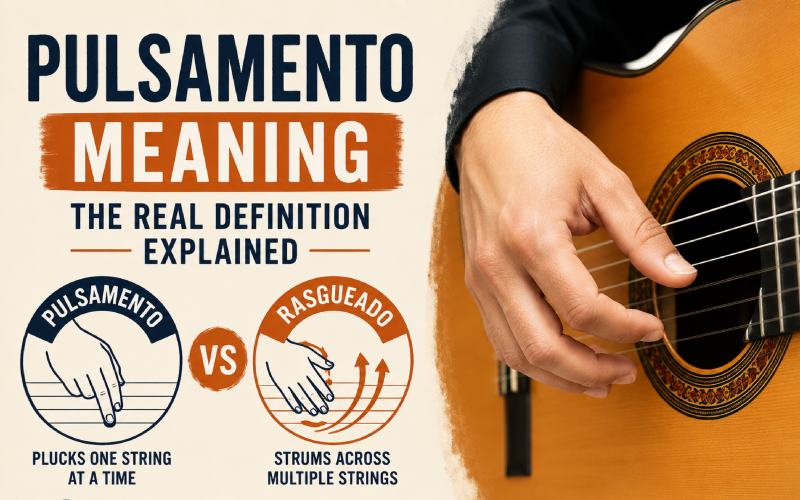
The word gets far more specific inside classical and flamenco guitar teaching. Here, pulsamento names a right-hand technique: plucking individual strings cleanly with the fingertips to produce single, clear notes.
The movement starts from the large knuckle rather than the fingertip alone. Guitarists use the index, middle, and ring fingers, often alternating them to play scales, arpeggios, or melodic lines. The goal is a clean, controlled attack on one string at a time, not a sweep across several strings at once.
This is why pulsamento sits opposite another common flamenco term.
Pulsamento vs Rasgueado
| Feature | Pulsamento | Rasgueado |
|---|---|---|
| Motion | Plucks one string at a time | Strums or sweeps across multiple strings |
| Sound | Clean, individual notes | Percussive, energetic, full-chord texture |
| Typical use | Melodic lines, scales, arpeggios | Rhythmic accents, driving sections |
| Hand technique | Fingertip contact from the large knuckle | Rapid strumming with several fingers |
Flamenco guitarists rely on both. Quiet pulsamento passages add depth and let a melody breathe, while rasgueado bursts create the fiery, percussive sound flamenco is known for. A piece often moves between the two within the same phrase.
Who Uses This Technique
Classical guitarist Andres Segovia is widely recognized for the clean, deliberate right-hand articulation that defines pulsamento at its best, heard clearly across his recordings of Bach and other classical composers. In flamenco, Paco de Lucia became known for moving fluidly between explosive rasgueado and delicate pulsamento within the same performance, a skill that helped him blend traditional flamenco with jazz influences.
Guitar teachers still use pulsamento as a foundational drill. Students practice alternating index and middle fingers slowly, focusing on even tone and timing before attempting faster passages.
Beyond the Guitar
Because pulsamento literally means pulse in Italian, the word shows up loosely in other contexts too, from describing a heartbeat to a general sense of rhythm in dance or daily routines. That usage is accurate as a plain translation of the Italian word. It is a different thing from the specific guitar technique, and the two meanings should not be confused with each other. Claims that pulsamento is a formal wellness treatment, a proven medical concept, or a trending digital marketing metric go beyond what the word actually means, and readers should treat those claims with caution.
About the Author: This piece was researched and written by a music writer with a background in classical and flamenco guitar pedagogy, focused on giving guitarists and music students accurate, jargon-free explanations of technique and terminology.