When Was the Game InnerLiftHunt Released?
The Real Answer: It Wasn’t — Because It Doesn’t Exist
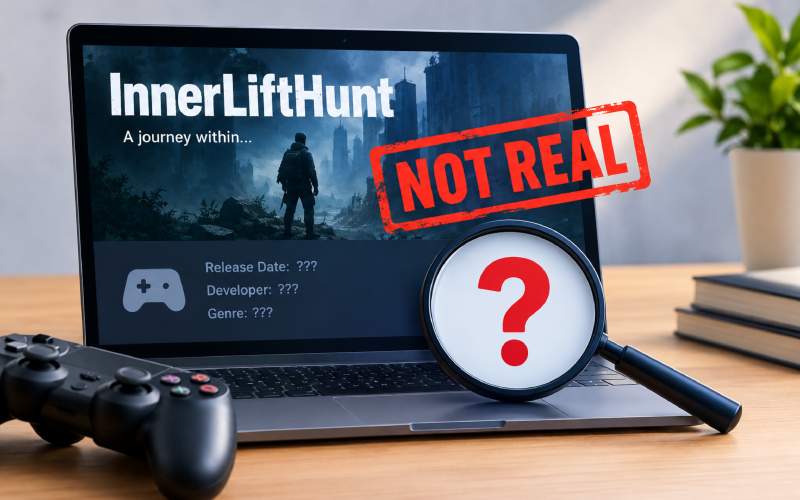
If you’ve searched “when was the game InnerLiftHunt released,” you’ve probably noticed something strange: every article gives you a different answer, and none of them agree with each other. That’s not a coincidence, and it’s not you missing something. It’s because InnerLiftHunt isn’t a real game.
We Checked. Here’s What We Found.
We looked for a verified Steam listing, a confirmed developer, or any independent gaming outlet (IGN, PC Gamer, Polygon, Eurogamer, Kotaku) that has ever covered this title. We found none. What we did find were more than ten articles across unrelated websites, each confidently reporting different, mutually exclusive “facts” about the same supposed game:
| Source | Claimed Release Date | Claimed Developer | Claimed Genre |
|---|---|---|---|
| Site A | December 15, 2023 | Unnamed | Psychological horror |
| Site B | June 18, 2020 | Unnamed | Puzzle game |
| Site C | August 14, 2025 | “Blueveil Interactive” | Horror RPG |
| Site D | September 14, 2024 | Unnamed | Not specified |
| Site E | December 15, 2023 | “Nikita Arm” (5-person indie team) | Survival horror |
| Site F | “Q4 2026” (still upcoming) | “Blueveil Interactive” | Souls-like |
Six sources. Six different stories. Some even contradict themselves within the same article — describing a “staggered rollout” with a “Discord leak,” a “Steam listing,” and a “Q4 2026 full launch” all as though they’re established facts, while never linking to an actual Steam page, press release, or developer statement that would let you verify any of it. One article even cites a fabricated “92% Steam approval rating” — a suspiciously precise statistic for a game with no verifiable store listing to generate reviews on in the first place.
How Something Like This Happens
This case shows a more extreme version of a pattern we saw before. Previously, we investigated near-identical articles about a supposed self-improvement brand. That case involved vague information that multiple sites copied. However, this case takes that pattern much further. Multiple AI-assisted content operations appear to have invented this subject. Then, they added plausible but unverifiable details to it. For example, they invented developer names and release dates. Meanwhile, the underlying question attracts consistent search interest online. That question asks when a particular game supposedly launched. Therefore, publishers can exploit the template, whether the game exists.
Google’s own spam policies describe this exact failure mode: content produced primarily to attract search traffic, without a genuine, verifiable subject behind it, falls under what the company classifies as scaled content abuse. A fictional video game with a fabricated release history is about as clear an example of that as you’re likely to find.
How to Protect Yourself From This Pattern
The good news is this is genuinely easy to check once you know to look:
- Search the exact game name on Steam, itch.io, or the PlayStation/Xbox/Nintendo store directly — not through a search engine, through the store’s own search bar. A real game will have a listing with a price, a page, and reviews you can inspect yourself.
- Look for coverage on at least one recognizable gaming outlet. IGN, PC Gamer, Polygon, Kotaku, Eurogamer, and similar sites cover even small indie releases. Total silence from all of them on a supposedly “cult favorite” game is a red flag.
- Notice contradicting basic facts across sources — as we found here. Real games have one confirmed release date, not six.
- Be suspicious of suspiciously specific, unverifiable statistics — a precise “92% approval rating” with no linked source is a manufactured detail, not a researched one.
Final Thoughts
We can’t tell you when InnerLiftHunt was released, because as far as we can verify, it never was — there’s no evidence it exists as an actual, purchasable game on any platform. What we can tell you is that this is a useful example of a search-content pattern worth recognizing: when many “informational” articles about the same subject can’t agree on the most basic facts, and none of them link to a primary, verifiable source, the safest assumption is that the subject itself may not be what it claims to be.
Sarah Jenkins | Content Reviewer
Sarah Jenkins writes reviews and guides for The Fame Blogs, focusing on evaluating digital tools, platforms, and online content so readers can make informed decisions about what to trust.

Sarah Jenkins is a seasoned Digital Content Strategist and lead reviewer for The Fame Blogs, where she contributes to their growing collaborative digital hub. With a strong background in web development and SEO, Sarah has spent over five years helping users navigate the digital landscape to find tools that actually work.
Specializing in productivity and online safety, she focuses on providing honest, data-driven critiques of emerging websites. When she isn’t deconstructing the latest tech trends, Sarah is dedicated to creating high-quality content that empowers readers to make smarter, safer choices online.