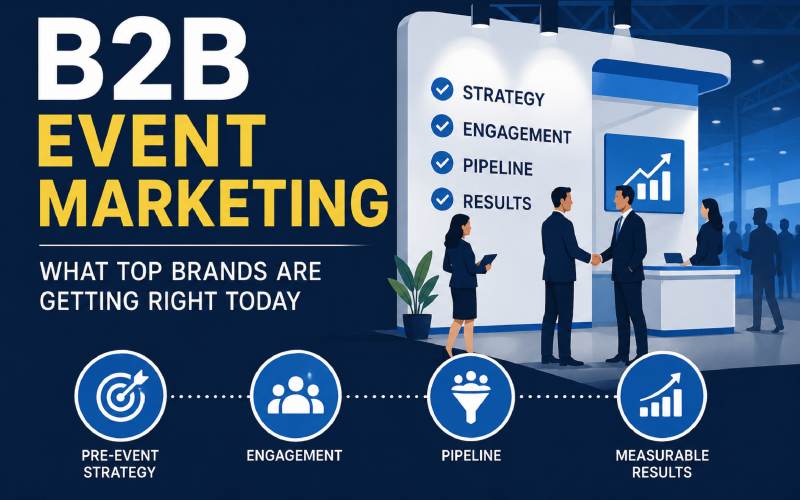
B2B event marketing is undergoing a significant transformation. The companies generating the strongest commercial returns from trade shows, hosted events, and industry conferences in 2025 are not necessarily the ones with the largest booths or the biggest budgets. They are the ones that have fundamentally rethought how B2B event marketing fits into the commercial engine of the business, and built the strategy, the measurement, and the follow-up infrastructure to make every event investment work harder.
They Have Moved From Presence to Intent
The biggest shift in high-performing B2B event marketing programs is the move from a presence mindset to an intent mindset. A presence mindset says: we need to be at this event because our competitors are there and because we have always been there. An intent mindset says: we are attending this event because it gives us the highest-concentration opportunity to reach a specific audience at a specific stage of their buying journey, and we have a specific plan to convert that opportunity into a measurable pipeline.
This mindset shift transforms every part of the event marketing process. It influences which events receive approval, how companies allocate budgets, what metrics define success, and how teams structure post-event follow-ups. Furthermore, B2B companies adopting this approach consistently generate higher pipeline contributions from their event investments than those still focusing only on maintaining an event presence.
For a deeper look at intentional B2B event marketing strategy, Content Marketing Institute shares annual B2B marketing benchmarks. These benchmarks explain how event marketing integrates with broader demand generation strategies and measure performance in detail.
They Invest Heavily in Pre-Event Engagement
B2B event marketing leaders understand that most commercial value comes before an event begins. Moreover, high-performing teams use six to eight weeks before major events to identify attending target accounts. They then engage these accounts through targeted content and personalized outreach campaigns. Additionally, they secure meetings before the event floor opens and prepare sales teams for upcoming conversations. Therefore, when the event starts, leading teams have full schedules and clear plans. They create meaningful interactions instead of relying only on random foot traffic.
Lunne designs B2B event and experiential marketing programs that create measurable pipeline. Learn more about our experiential design services.
They Have Built a Post-Event Revenue Engine
The majority of B2B event marketing investment is wasted in the week after the event ends. Leads sit unworked. Follow-up emails are delayed. The contextual relevance of the in-person connection fades before any meaningful commercial conversation takes place. The companies that generate the highest event marketing ROI have solved this problem by building a post-event revenue engine that activates immediately after the event closes.
This engine includes pre-built email sequences triggered by contact tags added during the event, a clear handoff process from marketing to sales for meeting-qualified contacts, and a content strategy that provides sales representatives with relevant, event-contextualized materials to use in follow-up conversations. The companies that do this consistently are not generating more event leads than their competitors. They are converting a higher percentage of the leads they do generate, which is where the real ROI in B2B event marketing actually lives.
They Design for the Buying Committee, Not the Individual
Sophisticated B2B event marketing programs plan for the reality that the purchasing decision they are trying to influence is rarely made by a single person. At any given industry event, multiple members of the same target account buying committee may be present: the economic buyer, the technical evaluator, the end user, the procurement lead. High-performing B2B event marketing programs develop engagement strategies for each of these personas, with different conversation approaches, different content assets, and different follow-up sequences, rather than treating all event contacts as identical regardless of their role in the buying decision.