
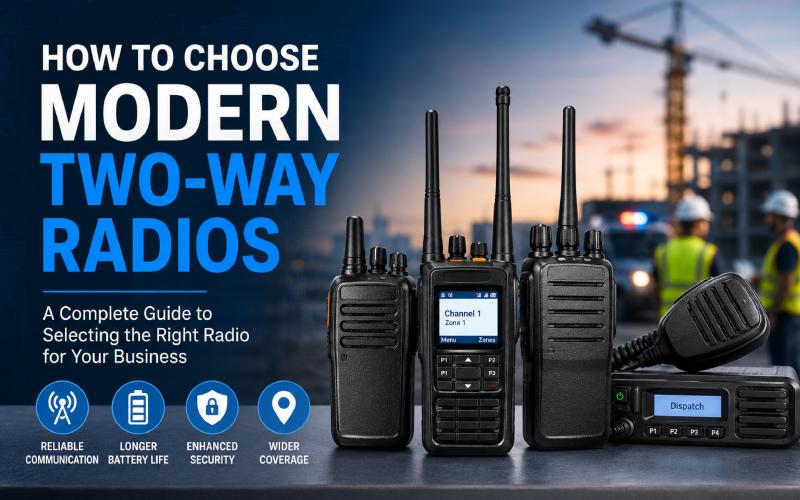
Reliable communication remains essential across many industries, including construction, security, transportation, logistics, manufacturing, and emergency response. Businesses that depend on instant communication often look for professional radio solutions from trusted suppliers such as RadioRed to ensure dependable performance in demanding environments. While smartphones have become common communication tools, two-way radios continue to provide immediate, reliable connectivity when cellular networks are unavailable, overloaded, or impractical.
Modern radiocommunication technology has advanced significantly over the years. Today’s portable, mobile, marine, aviation, and intrinsically safe radios offer superior audio quality, longer battery life, GPS tracking, digital encryption, and enhanced coverage capabilities. These improvements make two-way radios an indispensable tool for organizations that prioritize efficiency, safety, and operational coordination.
Understanding the available options and key features can help businesses make informed purchasing decisions and maximize the value of their communication investments.
Understanding the Different Types of Two-Way Radios
Not all radios are designed for the same purpose. Choosing the right type depends on the environment, industry, and communication requirements.
Portable Radios
Portable radios, also known as handheld radios, are among the most popular communication devices in the world. Their compact design and versatility make them suitable for a wide range of industries.
Security personnel, warehouse workers, construction crews, event organizers, and maintenance teams frequently rely on handheld radios for instant communication. Unlike mobile phones, portable radios allow users to communicate with entire groups at the push of a button.
Modern portable radios now include advanced features such as digital audio processing, noise cancellation, emergency alerts, and location tracking.
Mobile Radios
Mobile radios are installed in vehicles and provide stronger transmission power than handheld units. These systems are commonly used by transportation companies, public safety agencies, utility providers, and logistics organizations.
Because mobile radios can operate at higher power levels, they typically offer greater communication range. This makes them ideal for fleets that travel across large service areas and require continuous contact with dispatch centers.
Marine Radios
Marine radios are specifically designed for communication on waterways. They allow boat operators, ship crews, harbor authorities, and emergency responders to communicate effectively and safely.
Many modern marine radios feature GPS integration, Digital Selective Calling (DSC), weather alerts, and emergency distress functions. These capabilities are essential for ensuring safety during maritime operations.
Aviation Radios
Aviation communication systems are critical for maintaining safe air travel. Pilots use aviation radios to communicate with air traffic controllers, ground crews, and other aircraft.
Clear and reliable communication is essential in aviation, making high-performance radio equipment a necessity. Modern aviation radios provide excellent audio clarity and dependable operation under challenging conditions.
Intrinsically Safe Radios
Certain industries operate in environments where combustible gases, dust, or chemicals may be present. In these situations, standard communication equipment may pose safety risks.
Intrinsically safe radios are specially engineered to prevent sparks and excessive heat generation. Industries such as oil and gas, mining, petrochemicals, and chemical manufacturing often require intrinsically safe communication devices to comply with safety regulations.
Why Digital Radio Technology Is Becoming the Industry Standard
Digital radio technology has transformed the radiocommunication industry by offering significant advantages over traditional analog systems.
Improved Audio Quality
One of the most noticeable benefits of digital communication is enhanced voice clarity. Digital radios reduce background noise and maintain audio quality even at the edge of coverage areas.
This allows users to hear messages clearly in noisy environments such as construction sites, manufacturing facilities, and transportation hubs.
Better Spectrum Efficiency
Digital technology allows organizations to maximize available frequencies by supporting multiple communication channels within the same bandwidth.
This increased efficiency helps reduce congestion and improves overall system performance.
Longer Battery Life
Many digital radios are designed to consume less power than analog models. Improved energy efficiency enables longer operating times and reduces the need for frequent battery replacements or charging.
Enhanced Security
Communication security is becoming increasingly important across many industries. Digital radios often support advanced encryption technologies that help protect sensitive information from unauthorized interception.
Organizations involved in public safety, security services, and critical infrastructure management particularly benefit from secure communication systems.
Essential Features to Consider Before Purchasing
Selecting the right communication equipment requires careful evaluation of several important features.
Coverage Requirements
The first consideration should be communication range. Small facilities may only require handheld radios, while larger operations often need repeaters and infrastructure enhancements to ensure full coverage.
Understanding the operating environment can help determine the most effective solution.
Battery Performance
Battery life directly impacts productivity. Organizations should look for radios that can operate through full work shifts without interruption.
Lithium-ion battery technology has significantly improved performance, allowing many modern radios to function for extended periods between charges.
Durability
Industrial environments can be challenging for electronic equipment. Dust, moisture, vibration, and accidental impacts can damage poorly constructed devices.
Professional-grade radios are designed to withstand harsh conditions and often meet military durability standards.
GPS Tracking
GPS functionality allows organizations to monitor the location of personnel and vehicles in real time.
This feature is particularly useful for transportation fleets, security operations, utility companies, and emergency response teams.
Emergency Features
Many advanced radios include dedicated emergency buttons, man-down alerts, lone-worker protection, and automated alarm systems.
These features can significantly improve workplace safety and response times during critical situations.
The Role of Repeaters in Expanding Communication Coverage
As organizations grow, maintaining reliable communication across large facilities or geographic regions becomes more challenging.
Radio repeaters address this issue by receiving and retransmitting signals to extend communication coverage.
Repeaters are commonly used in:
- Manufacturing plants
- Warehouses
- Transportation networks
- Hospitals
- Educational campuses
- Public safety systems
- Industrial complexes
Modern digital repeaters provide excellent audio quality while supporting multiple users and communication groups simultaneously.
Organizations operating across large areas often consider repeater systems essential components of their communication infrastructure.
Important Radio Accessories That Improve Performance
Accessories play a significant role in maximizing the effectiveness of radio systems.
Speaker Microphones
Remote speaker microphones allow users to communicate conveniently without removing radios from belts or carrying cases.
They are widely used by security professionals, law enforcement officers, and emergency personnel.
Earpieces and Headsets
In noisy environments, headsets and earpieces improve communication clarity while maintaining privacy.
Many businesses use these accessories to increase efficiency and reduce distractions.
Multi-Unit Chargers
Organizations managing multiple radios can benefit from centralized charging stations that simplify equipment maintenance and readiness.
Carrying Cases and Holsters
Protective accessories help extend equipment lifespan and improve user comfort during daily operations.
Emerging Trends in Radiocommunication Technology
The radiocommunication industry continues to evolve through ongoing technological innovation.
GPS and Data Integration
Modern communication systems increasingly combine voice communication with data services such as:
- Text messaging
- Location tracking
- Status updates
- Telemetry monitoring
- Emergency notifications
These capabilities improve operational awareness and streamline workflows.
Enhanced Interoperability
Many organizations now require communication systems that integrate with multiple technologies and networks.
Interoperable solutions allow users to communicate across departments, locations, and platforms without sacrificing reliability.
Artificial Intelligence Applications
Artificial intelligence is beginning to influence communication systems through:
- Automated noise reduction
- Predictive maintenance monitoring
- Intelligent dispatch systems
- Voice enhancement technologies
These innovations are expected to play an increasingly important role in future communication networks.
Stronger Cybersecurity Measures
As communication systems become more connected, cybersecurity remains a growing concern.
Manufacturers continue to develop stronger encryption and security protocols to protect sensitive communications from evolving threats.
Choosing the Right Supplier
Selecting quality equipment is only part of building an effective communication system. Working with an experienced supplier ensures access to technical expertise, product support, and reliable equipment recommendations.
Organizations should look for suppliers that offer products from recognized manufacturers, provide technical guidance, and understand the communication challenges faced by different industries.
Businesses seeking advanced digital radios, communication accessories, repeaters, and modern radiocommunication solutions can explore available options through radiored.com.mx, where professional-grade equipment supports a wide range of operational requirements.
Conclusion
Two-way radios remain among the most dependable communication tools available today. From portable and mobile radios to marine, aviation, and intrinsically safe communication devices, modern solutions offer impressive capabilities that improve productivity, safety, and operational efficiency.
Advances in digital technology, GPS tracking, encryption, and repeater systems have transformed how organizations communicate. By carefully evaluating communication needs, selecting appropriate equipment, and investing in reliable technology, businesses can build communication networks that support long-term growth and success.
As radiocommunication technology continues to advance, organizations that embrace modern communication solutions will be better equipped to meet future challenges while maintaining safe, efficient, and reliable operations.