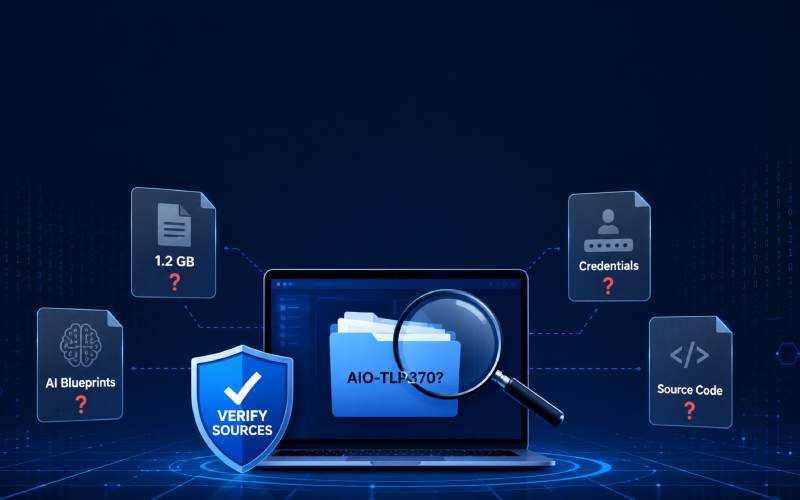
Search for “thejavasea.me leaks aio-tlp370” and you get dozens of articles that all sound certain. One says the leak is 1.2 GB. Another says it exposed AI model blueprints. A third gives an exact date. The problem is that these claims contradict each other, and none point to a named security firm, a breach notification, or a news outlet that verified the incident. This article separates what the label likely means from what the internet is guessing at.
What TheJavaSea.me Leaks AIO-TLP370 Actually Refers To
TheJavaSea.me is a name tied to file-sharing and archive-style websites where users upload and index bundles of data. AIO-TLP370 is the label attached to one specific package on that kind of site. No government agency, established cybersecurity vendor, or mainstream outlet has published a verified breach report under this exact name. What exists instead is a wave of blog posts, most published within the last year, that describe the package in different and often conflicting ways.
Breaking Down the Name AIO-TLP370
The two halves of the label have plausible, ordinary meanings. AIO commonly stands for All-In-One, a term hacking and cracking forums use for a bundle that mixes several file types or tools into one download. TLP normally stands for Traffic Light Protocol, a real classification system security teams use to mark how widely a document can be shared, with levels such as clear, green, amber, and red. TLP370 does not match that standard format, so it is more likely a batch number or an internal file name than a recognized security classification. In short, the name reads like an invented label meant to sound official, not confirmation that a formal, government-grade breach occurred.
Why the Claims Do Not Line Up
Compare five articles on this topic and the details shift every time. File size ranges from roughly one gigabyte to unspecified “massive” archives. The reported contents swing between login credentials, source code, API keys, internal playbooks, and even AI model files, depending on which site you read. Dates jump between early 2025 and vague phrases like “recent weeks.” This pattern is a strong signal that most writers are rewording each other’s guesses rather than reporting original findings.
What Legitimate Verification Would Look Like
A real, confirmed data leak usually leaves a trail. Affected companies issue a statement. A recognized firm such as a national CERT, a known threat intelligence vendor, or a data breach tracking service lists the incident with specifics. Journalists at established outlets get a comment from the organization involved. For thejavasea.me leaks aio-tlp370, none of these markers are present in mainstream reporting as of this writing. That does not prove nothing happened. It means the claim sits in the same category as a rumor until a named, checkable source confirms it.
Why This Keyword Keeps Attracting Traffic
Leak-themed keywords rank well because curiosity and fear both drive clicks. A phrase that sounds technical and alarming, paired with a strange website name, invites people to search for reassurance or details. Content sites notice the search volume and publish quickly, often without a named author or a cybersecurity credential attached, then the next site paraphrases the first one. The cycle repeats until dozens of pages exist for a term that started with little to no verified basis.
How to Protect Yourself Regardless of the Details
Even without confirmation of this specific package, the underlying advice still matters. Use a password manager and unique passwords for every account, so one exposed credential does not unlock the rest of your accounts. Turn on two-factor authentication anywhere it is offered, since that step stops most stolen-password attacks. Avoid downloading archives from unfamiliar leak or file-sharing sites, since these downloads are a common source of malware, not a safe way to check if your data is exposed. If you manage business systems, rotate API keys and credentials on a regular schedule instead of waiting for a headline to prompt action. Check your accounts against a reputable breach-lookup service that names its data sources, rather than a random blog post.
The Bottom Line
TheJavaSea.me leaks aio-tlp370 is a search trend built mostly on speculation. The name likely points to a bundled data package shared on a file-indexing site. And the terms AIO and TLP have ordinary technical meanings that do not, by themselves, prove a major breach occurred. Treat any article that gives you an exact file size, a precise date, or a specific list of stolen data, without linking to a named, checkable source, with caution. Strong account security habits protect you regardless of whether this particular story turns out to be real, exaggerated, or invented. for more articles like this visit the fame blogs.
Frequently Asked Questions
Is thejavasea.me leaks aio-tlp370 a confirmed data breach?</strong></strong></strong>
No. As of this writing, no established cybersecurity firm, CERT, or mainstream news outlet has published a verified report confirming the incident. The claims circulating online come mainly from blog posts that do not cite a primary source.
What does AIO-TLP370 mean?
AIO commonly stands for All-In-One, a term used for bundled file archives. TLP usually refers to Traffic Light Protocol, a real information-sharing classification system, though the number 370 does not match its standard format, suggesting the label is an informal batch or file name.
Should I download files from thejavasea.me to check if I am affected?
No. Downloading archives from unfamiliar leak or file-sharing sites carries a real risk of malware. Check your accounts through a reputable breach-lookup service instead, and focus on password and two-factor authentication hygiene.
Why do so many articles about this leak disagree with each other?&lt;/strong>
Most of the articles on this topic appear to paraphrase each other rather than cite an original, verified source, which is why file sizes, dates, and described contents vary from one article to the next.